

About the Oregon Offshore Wind Energy Roadmap
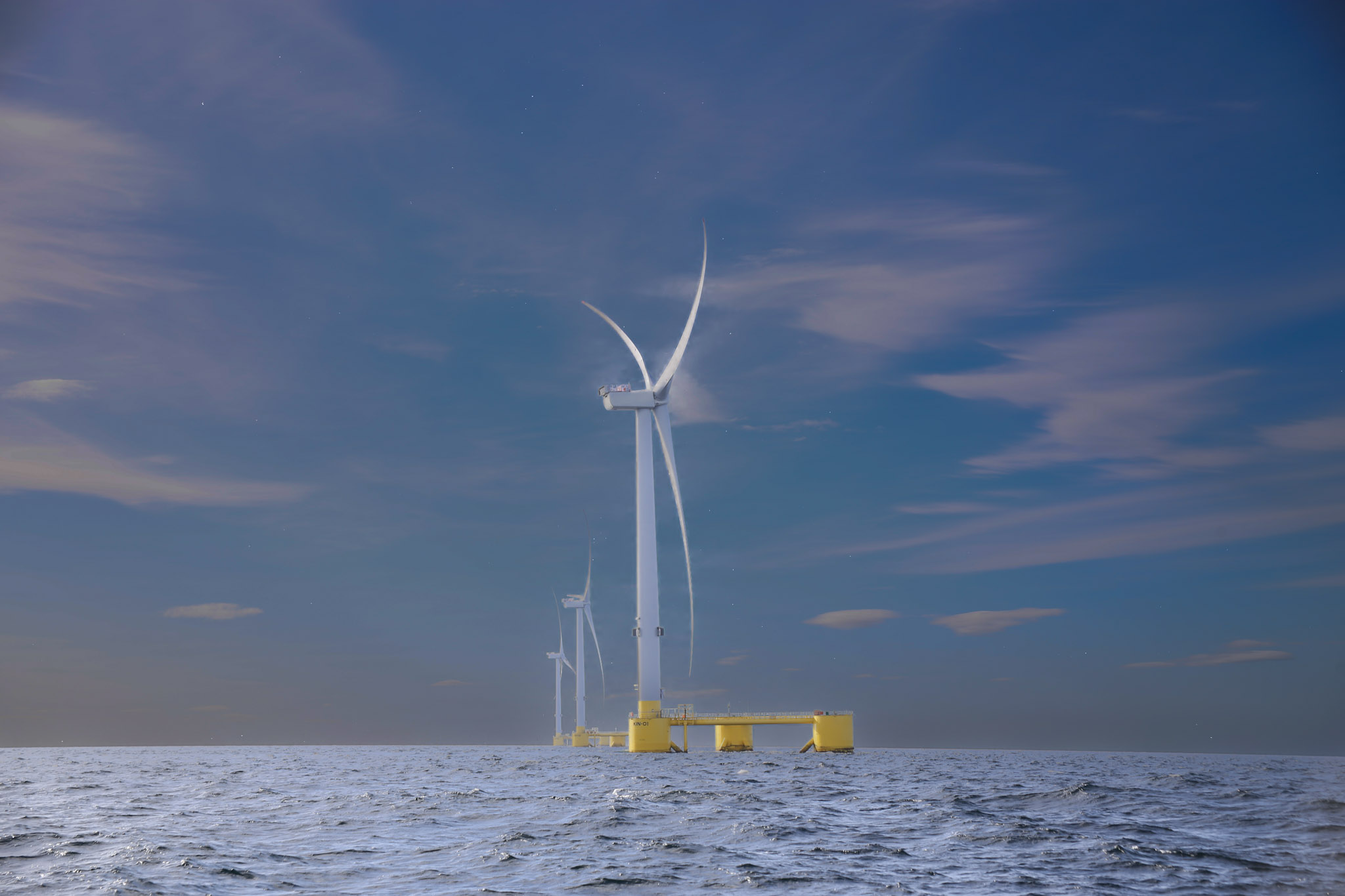
Following the direction of House Bill 4080 from the 2024 legislative session, the Department of Land Conservation and Development is leading the development of an Offshore Wind Energy Roadmap for the State of Oregon. The Roadmap will define standards to be considered in the processes related to offshore wind energy development and approval. The standards defined in the Offshore Wind Roadmap must support:
- Effective stakeholder engagement;
- Local and regional coastal communities;
- The creation of economic opportunities and sustainment of existing local and regional economies;
- The creation of an offshore wind energy workforce that is local, trained, housed and equitable;
- Protection of tribal cultural and archaeological resources, culturally significant viewsheds and other interests of Indian tribes;
- Protection of the environment and marine species; and
- Achievement of Oregon's energy and climate policy objectives. This includes energy resource diversity, reliability and resilience of state and regional energy systems.
The Roadmap may also result in strategies Oregon pursues to direct future research, investment, engagement, partnerships, or other activities related to the potential development of an offshore wind presence in Oregon.
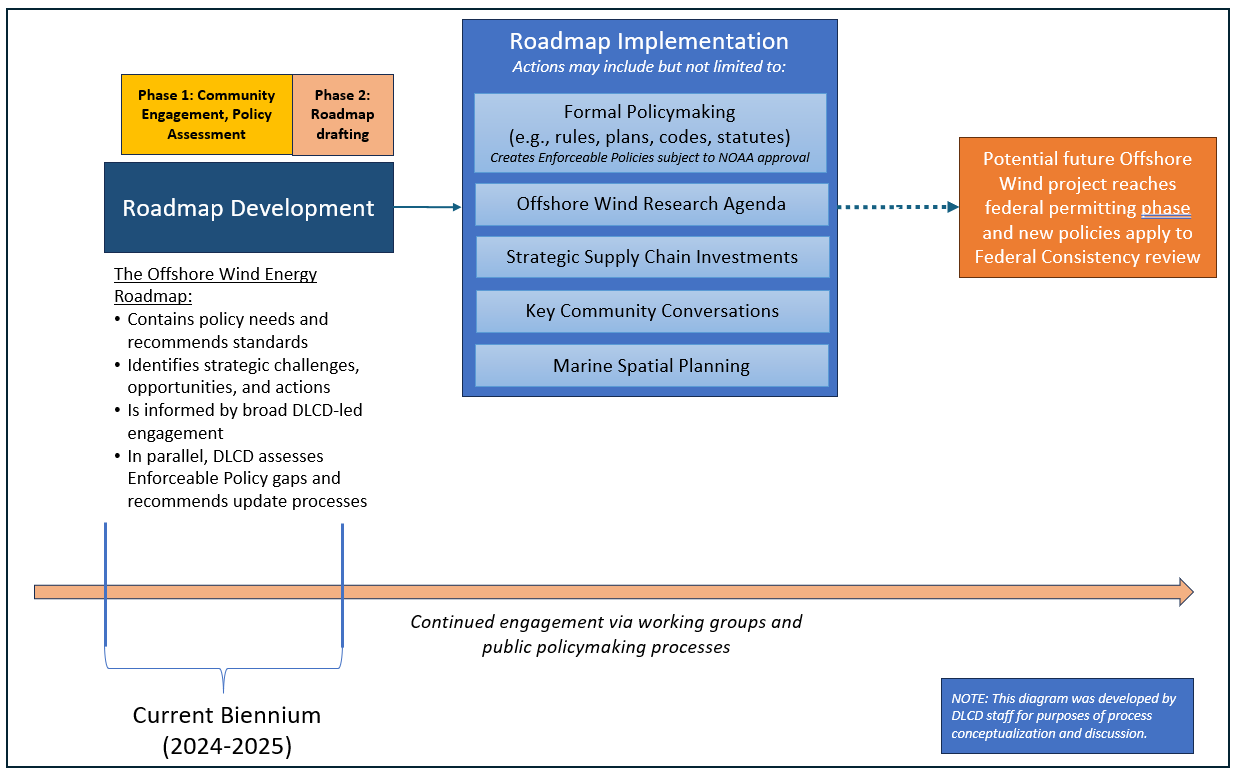
The Roadmap development process is not a formal rulemaking effort. The Roadmap will not directly create or amend laws, rules, or other enforceable policies. New state enforceable policies would occur through separate processes which the Roadmap would identify and inform.
DLCD conducted outreach and engagement with state agencies, local governments, and affected communities to support developing the Offshore Wind Energy Roadmap. DLCD is also working with Tribal Governments on how they want to be involved in the formation of the Roadmap. Community engagement will provide critical feedback to DLCD as we respond to HB 4080.
 Roundtable for the Offshore Wind Energy Roadmap
The process used to develop a state Offshore Wind Energy Roadmap is as important as the content. DLCD will appoint members of a Roundtable for the Offshore Wind Energy Roadmap (Roadmap Roundtable) to hold collaborative conversations around offshore wind energy development and advise on creating the Roadmap’s policy and strategy recommendations.
The Offshore Wind Energy Roadmap development process will include opportunities for community engagement through June 2025. DLCD will also be seeking information and guidance directly from certain affected communities as part of the Roadmap development process.
DLCD hopes to engage and learn from a diverse group representing the Oregon Coast and Oregonians as a whole in this process. DLCD is committed to seeking the guidance of and centering the needs of historically marginalized communities in the development of the Offshore Wind Roadmap.
How Can I Be Involved in the Offshore Wind Energy Roadmap?
If you are interested in staying informed on the progress of the Offshore Wind Energy Roadmap, please sign up for our listserv here: Sign up to receive notices and updates from DLCD on Offshore Wind
The Offshore Wind Energy Roadmap development process will offer multiple ways to participate, including:
Roadmap Roundtable Meetings
Monthly meetings of the Offshore Wind Energy Roadmap Roundtable are public and include options to attend virtually or in-person. Public comment opportunities will be available during the meetings. Meeting summaries will be posted on this website, and recordings of the meetings will be available on the DLCD YouTube Channel.
Draft Roadmap Comments
The draft Offshore Wind Energy Roadmap is now available for public review. The draft was developed over a year of advice from a roundtable group representing a broad array of interests around the future of offshore wind energy in Oregon. The draft is also a product of consultation with representatives of federally recognized tribes in Oregon, feedback provided during public meetings, and meetings with existing ocean users and wind energy businesses.
The Roadmap draft may be accessed by the following links:
Public Meetings (Detailed on the DLCD Roadmap Webpage)
DLCD invited community members to comment at public meetings hosted through Spring of 2026. Meetings provided information about the Roadmap draft and were held virtually and in-person. The Roadmap was completed and submitted to the Oregon legislature in July, 2026.
The Roadmap considers four alternative futures for Oregon and its coast—two include offshore wind turbines, and two do not. The Roadmap defines four pathways to these two futures with different benefits and considerations. For the two futures that include wind energy development, there are “checkpoints" where a project would be reviewed to determine whether it should move forward, gather more information, or a different pathway should be chosen. The Roadmap outlines recommended standards and actions to support the interests of the state and coastal communities related to the different pathways.
Further Background
From 2019 to 2024, the Bureau of Ocean Energy Management (BOEM) led an information gathering and engagement process to identify Wind Energy Areas off the coast of Oregon for potential future offshore wind energy development. This process generated a significant amount of interest from Oregon communities, including concerns and questions from coastal communities who had concerns about future offshore wind energy development.
In 2023, at the request of representatives from the renewable energy sector, fishing industry, labor unions, environmental groups, and other interests, Oregon Consensus facilitated an informal work group to explore the impacts and benefits of offshore wind energy along Oregon’s coast. This work group recommended Oregon develop an “Offshore Wind Roadmap with Exit Ramps.” The Roadmap is intended to offer a comprehensive vision and practical guidelines for how Oregon might incorporate offshore wind energy with the environment, existing ocean uses, cultures, and communities.
This effort contributed to the passage of House Bill 4080 in the 2024 Oregon Legislative Session, which directed DLCD to lead a Roadmap development process for the state.
In April 2024, the United States Department of Interior announced proposed auction details and lease terms for two areas off the Oregon coast for offshore wind energy development.
The Oregon Coastal Management Program (OCMP), led by DLCD, conducted a Federal Consistency review of the proposed BOEM leasing action, which concluded July 17, 2024. The OCMP responded to BOEM with a decision letter determining that the proposed leasing action is consistent with the enforceable policies of the state coastal management program, provided multiple conditions are included with the action. These conditions addressed topic areas such as species and habitat protection, ongoing state involvement in offshore surveys, protection of archaeological resources, and coordination with affected users of ocean resources.
The Oregon Department of Land Conservation and Development maintains this website. Please contact the Marine Affairs Coordinator below for more information or with comments.
Andy Lanier
Marine Affairs Coordinator
635 Capitol St. NE, Suite 150
Salem, OR 97301-2540
Andy.Lanier@dlcd.oregon.gov