About
Coquille Point is a designated Marine Garden
Marine Gardens are designated to protect rocky habitat resources through public enjoyment, learning opportunities, and by maintaining ecological integrity. Closed to the take of marine invertebrates with exceptions for single mussels for bait and razor clams. Sport fishing is allowed, and commercial fishing is prohibited. No collection of marine aquatic vegetation except by scientific research permit from OPRD.
Features
Key Resources
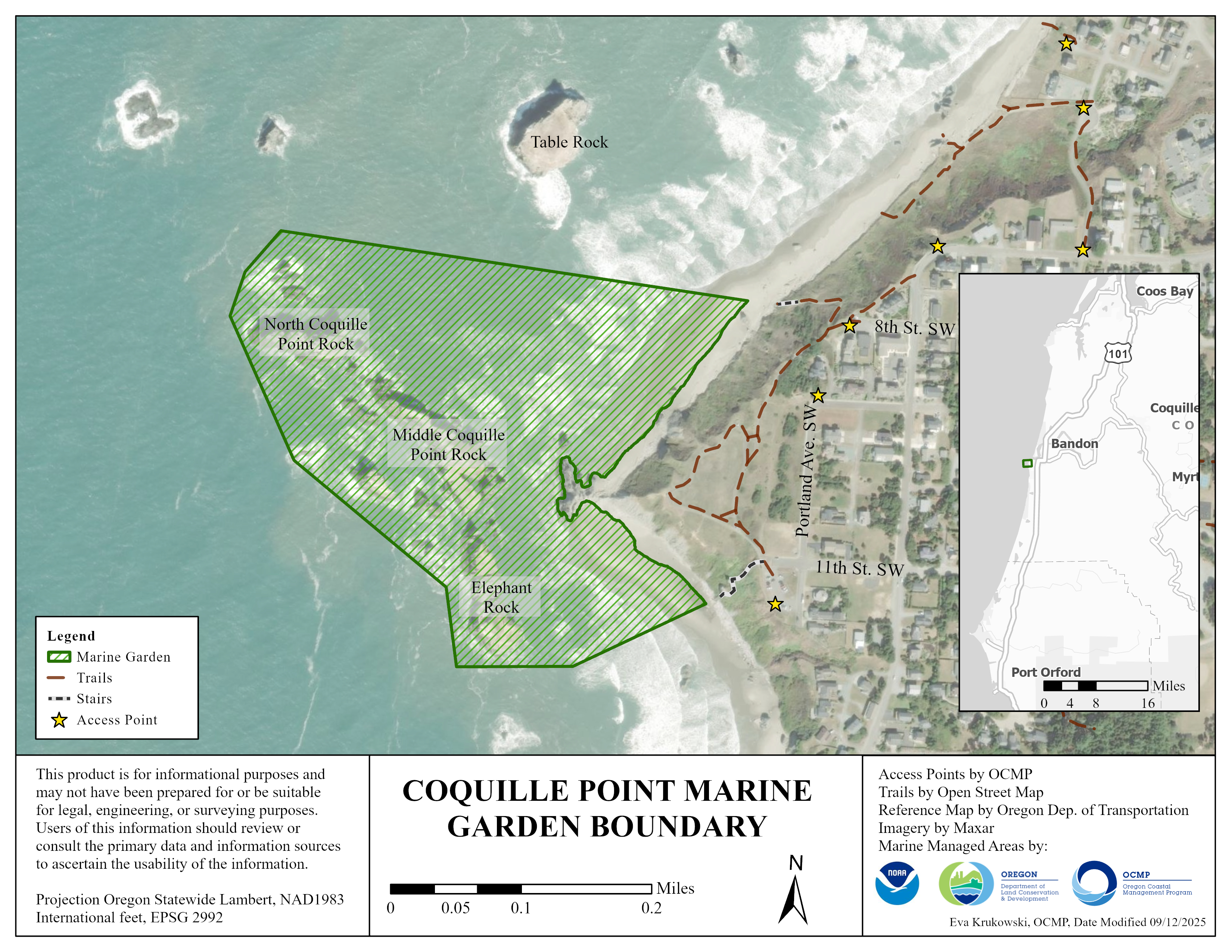
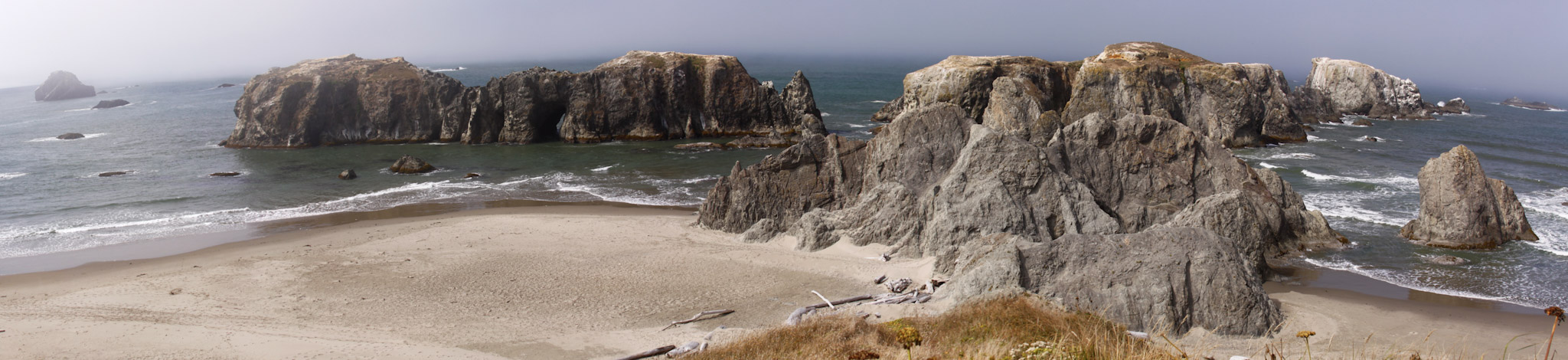
The Coquille Point Marine Garden encompasses roughly 50 acres covering about 0.3 miles of shoreline around the Coquille Point headland. There are around 16.6 acres of intertidal habitat area and six acres of offshore rocks and islands within the boundary. The Marine Garden boundary includes the intertidal habitat between a line perpendicular to the shore from the 8th Street beach access point and a line perpendicular to shore from the Coquille Point beach access staircase. The largest sea stacks within the boundaries include Elephant Rock, Middle Coquille Rock, and North Coquille Rock.
Site Uses
Coquille Point is used by residents and visitors primarily for photography, beachcombing, picnicking, bird watching, observing pinnipeds, flying drones, exercising dogs, playing on the beach, fishing, paddle boarding, climbing rocks, biking, jogging, flying kites, and strolling on the beach.
Access
There are two main public beach access points that frame the shoreline of the Coquille Point Marine Garden: Coquille Point parking lot managed by U.S. Fish & Wildlife Service and the 8th Street wayside with a trail managed by U.S. Fish & Wildlife Service.
Management
Site Management
Coquille Point was designated as a Marine Garden in 2024. The original site proposal document can be found here: Coquille Point Marine Garden Site Proposal, 2020. The site management plan for Coquille Point is currently being drafted. You can follow this process here: Rocky Habitats Management Plan Development.
Regulations
Coquille Point Marine Garden is closed to the take of shellfish and other marine invertebrates except single mussels may be taken for bait while fishing in the area. Sport fishing is allowed in the Marine Garden. The collection of marine plants like kelp or seaweed from the ocean shore is not allowed within the site boundary, except by scientific research permit from the Oregon Parks and Recreation Department.
The harvest of marine resources by members of Federally Recognized Tribal Nations are unaffected by the Coquille Point Marine Garden designation regulations. The new rules at the Coquille Point Marine Garden do not affect Consent Decrees, Co-Management Agreements, or other agreements between the State of Oregon and any Federally Recognized Tribe in Oregon. These rules do not change any state agency policy recognizing Tribal harvest rights in rocky habitat areas.
Ownership
- Submerged and submersible lands (intertidal area): Department of State Lands
- The United States Fish and Wildlife Service (USFWS) owns and manages the headlands at Coquille Point and the offshore rocks and islands within and adjacent to the Marine Garden
- The Ocean Shore is managed by the Oregon Parks and Recreation Department
Management Plan
Download The Coquille Point Management Plan
Feedback Opportunity: Rocky Habitat Site Management Plan Drafts
The Oregon Coastal Management Program is Seeking Feedback on Seven Rocky Habitat Management Plans
OCMP facilitated a two-part public workshop series in 2024 and 2025 to help inform the development of area-based management plans. OCMP has finished drafting the plans following the workshops in 2024 and 2025. The Plans, informed by coastal communities, will provide a framework to support activities within Marine Conservation Areas, Marine Research Areas, and Marine Gardens near Cannon Beach, Netarts, Depoe Bay, and Port Orford.
Read the Draft Plans:
- Ecola Point Marine Conservation Area Management Plan
- Chapman Point Marine Garden Management Plan
- Cape Lookout Marine Conservation Area Management Plan
- Fogarty Creek Marine Conservation Area Management Plan
- Cape Foulweather Complex Marine Conservation Area Management Plan
- Blacklock Point Marine Conservation Area Management Plan
- Cape Blanco Marine Research Area Management Plan
Your feedback is important. OCMP is especially interested in feedback on:
- Chapter 2: Site Management Strategies
- Appendix H: Recommended Implementation Actions Table
Comments are due February 2, 2026
When commenting, please reference specific page numbers and section headers. You’re also welcome to suggest additional writing, graphics, images, or links that could enhance the Plan.
Email comments to: "
Mail comments to: ATTN: Andy Lanier, OCMP-DLCD, 635 Capitol St. NE, Suite 150, Salem, OR 97301-2540.
Please reach out to Andy Lanier, the Marine Affairs Coordinator with any questions, comments, or to request more information,